Supported by: Das Land Nordrhein-Westfalen und die Europäische Union im Rahmen des Europäischen Fonds für regionale Entwicklung
Period: 01/2010 – 04/2012
The goal of this project is the development of an innovative patient couch with integrated sensors which allow a contactless measurement of the electrical heart activity and a magnetic tracking of instruments and catheters.
iToilette
Funded by: BMWi ZIM
Period: 08/2009 - 09/2011
The intelligent toilet is targeted to daily monitoring of patients suffering from dementia. While they might forget to take measurements with conventional devices, the "call of nature" ensures use of the sensors embedded in the intelligent toilet.
iSHUNT: Intelligent Mechatronic Implant for Hydrocephalus Therapy
Funded by: German Federal Ministry of Research (BMBF)
Period: 01/2009 – 08/2013
This project aims at the development of a pressure-controlled liquor drainage system that can be fully implanted.
Electronic Shunts for Hydrocephalus Therapy
Supported by: START Nachwuchsprogramm der Medizinischen Fakultät, RWTH Aachen
Period: 08/2008 - 08/2010
Within this project, a large animal model for research in implantable intracranial pressure sensors is investigated and established.
HeartCycle – Compliance and effectiveness in HF and CHD closed-loop management
Supported by: EU (IP, 7th framework)
Period: 03/2008 – 01/2013
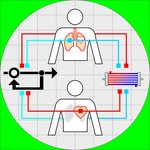
This large integrated EU project aims at a technology-supported solution for cardiovascular disease management incorporating two feedback loops. The first loop is patient-centered and aims at autonomous delivery of therapy employing proper automatic decison support to the chronic patient. The second, cascaded loop involves medical staff and allows to tune and adapt the therapeutic scheme based on the actual therapeutic results.
The overall goal is to improve the delivery of therapy for cadiovascular diseases and to reduce the costs of health care. The project unites 18 partners from industry and academia and has an overall budget of 20,7 Mio. € .
Harnblasenfüllstand
Supported by: Manfred-Sauer-Stiftung
Period: Herbst 2007 - Sommer 2008
The goal of this project is to develop a technique for measuring the urine volume inside the bladder of paraplegic patients. Together with clinical partners from the University of Heidelberg, MedIT is conducting a preclinical trial in paraplegic patients and healthy volunteers.
Perioperative monitoring of ventilation and perfusion using electrical Impedance tomography
Electric impedance tomography offers the opportunity to functionally image both ventilation- and perfusion-in-duced changes in transthoracic impedance. However, changes in impedance due to ventilation are ca. 10 times larger than those induced by perfusion. Thus, often perfusion is hidden by the larger signal contents of venti-lation.
The aim of this project is to develop algorithms to seperate these two sources and to create a method for regional ventilation and for regional perfusion imaging.
Non-contact monitoring of heart and lung activity using magnetic induction
Magnetic impedance measurements are contact-free and bear the potential to monitor heart and lung without cabling. To increase robustness and measurement accuracy as compared to single coil systems, in this DFG funded project a planar multi-coil measurement system acting as a planar magnetic tomograph is developed and tested
Smart Shunts for Hydrocephalus Therapy
Suppported by: Holste Stiftung der RWTH Aachen
Period: 08 /2007 - 08/2008
This project aims at developing an implant prototype which allows to measure intracranial pressure and body acceleration and to transmit these data to the outer world.
Smart Life Support
Funded by: Deutsche Forschungsgemeinschaft
Period: 08/2007 - 07/2010
The DFG funded "Smart Life Support" is a joint research effort of six engineering institutes and clinics from RWTH Aachen University. The overall goal is the development of methods for automatic control of life supporting machines. It consists of three joint projects, namely “PhysioMod”, “SmartECLA” and “HeartControl”.
MedIT is active in two of these projects. The goal of the project “HeartControl” is to develop strategies for control of blood flow in ventricula assist devices (VAD) and total artificial hearts (TAH).
By contrast, "Smart-ECLA" deals with patient-adaptive con-trol of gas and blood flow in extracorporal lung assist devices.







![[TRANSLATE:]](/fileadmin/_processed_/f/e/csm_Manfred_Sauer_Stift_Logo_7aa461c6b8.png "[TRANSLATE:]")